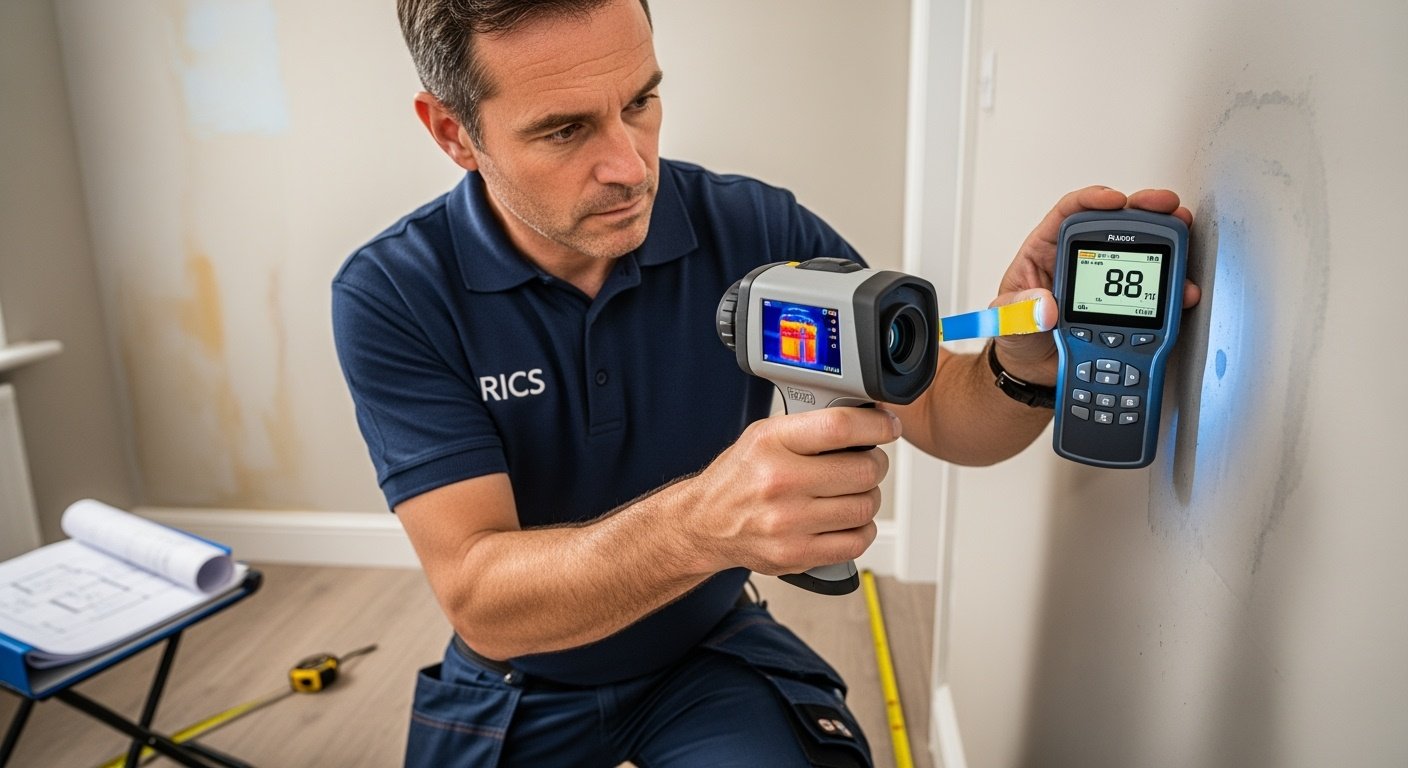
Damp problems affect over 60% of Cheshire properties at some point in their lifespan. As chartered surveyors specializing in Chester and Cheshire properties, we encounter damp issues in various forms - from rising damp in Victorian terraces to condensation problems in modern apartments. Understanding these issues is crucial for both property buyers and existing homeowners.
This comprehensive guide explains the different types of damp problems common in Cheshire properties, how to identify them, their causes, and most importantly, the professional solutions available. Whether you're buying a property with known damp issues or dealing with emerging problems in your existing home, this guide provides the knowledge you need to address damp effectively.
Health Warning
Untreated damp can cause serious health problems including respiratory issues, asthma, and allergic reactions. Children, elderly people, and those with existing health conditions are particularly vulnerable. Professional treatment is essential, not just for property preservation but for occupant health.
The Three Main Types of Damp
Understanding the different types of damp is essential for effective treatment. Each type has distinct causes, identification methods, and treatment approaches. Misdiagnosing damp type often leads to ineffective treatment and wasted money.
Interactive Damp Diagnostic Tool
Answer these questions to help identify the type of damp problem you may be experiencing:
Rising Damp
Cause: Groundwater rising through walls via capillary action
Height: Usually limited to 1-1.5 meters above ground level
Common in: Older properties with failed or absent DPC
Penetrating Damp
Cause: Water ingress through external walls, roofs, or windows
Pattern: Often appears after rain, may be at any height
Common in: Properties with maintenance issues or storm damage
Condensation
Cause: Warm moist air meeting cold surfaces
Pattern: Often on north-facing walls, around windows, in corners
Common in: Properties with poor ventilation or heating
Rising Damp in Cheshire Properties
Rising damp affects many older Cheshire properties, particularly Victorian and Georgian buildings constructed before modern damp proofing standards. Chester's abundance of period properties makes this a significant local issue.
Understanding Rising Damp
How rising damp occurs:
- Capillary action: Groundwater rises through porous masonry materials
- Failed DPC: Deteriorated or bridged damp proof course allows moisture passage
- Absent DPC: Older properties built without damp proof courses
- Ground level changes: External ground levels raised above original DPC
Identifying rising damp:
- Tide marks: Distinct horizontal lines on internal walls up to 1-1.5m high
- Salt crystallization: White crystalline deposits on wall surfaces
- Peeling decoration: Paint and wallpaper lifting due to salt damage
- Damp smell: Musty odors particularly noticeable in closed rooms
- Cold walls: Affected walls feel cold and damp to touch
Professional Diagnosis
Accurate diagnosis requires professional testing: Electronic moisture meters can give false readings near heating systems or recent leaks. Professional surveyors use multiple testing methods including gravimetric analysis and salt analysis to confirm rising damp diagnosis.
Rising Damp Treatment Options
Chemical Damp Proof Course (DPC) Injection:
- Process: Injection of water-repellent chemicals into wall base
- Effectiveness: Highly effective when correctly installed
- Cost: £30-£50 per linear meter of wall treatment
- Warranty: Typically 20-30 year guarantees provided
- Disruption: Minimal - can be completed from outside in most cases
Physical DPC Installation:
- Process: Cutting horizontal slot and inserting physical barrier
- Materials: Plastic, slate, or bituminous membranes
- Cost: £80-£150 per linear meter depending on wall thickness
- Durability: Permanent solution with proper installation
- Disruption: Significant - requires internal access and making good
Electro-osmotic Systems:
- Process: Electrical charge reversal to repel groundwater
- Installation: Copper probes inserted into walls
- Effectiveness: Variable results depending on soil and building conditions
- Cost: £2,000-£8,000 depending on property size
- Maintenance: Ongoing electrical consumption and system monitoring
Penetrating Damp Issues
Penetrating damp occurs when water enters buildings through external walls, roofs, or openings. This type of damp is particularly common in Cheshire due to the region's high rainfall and exposure to prevailing westerly winds.
Common Causes in Cheshire Properties
External Wall Issues:
- Pointing failure: Deteriorated mortar joints allowing water penetration
- Brick damage: Spalled or cracked bricks creating water entry points
- Render problems: Cracked or blown render exposing underlying masonry
- Cavity wall issues: Bridged cavities or failed ties in cavity walls
Roof and Gutter Problems:
- Slate slippage: Common in Chester's Victorian properties with Welsh slate roofs
- Gutter overflow: Blocked or inadequate guttering causing wall saturation
- Flashing failure: Failed lead work around chimneys and roof junctions
- Flat roof issues: Failed membranes on flat roofs and extensions
Window and Door Issues:
- Sill problems: Damaged or poorly designed window sills
- Frame deterioration: Rot or damage in timber window frames
- Seal failure: Failed mastic seals around window and door openings
- Threshold issues: Poor weather sealing at door thresholds
Penetrating Damp Solutions
External Repairs:
- Repointing work: £15-30 per square meter depending on access
- Render repairs: £40-80 per square meter for patch repairs
- Brick replacement: £100-200 per square meter for extensive replacement
- Waterproof coatings: £20-40 per square meter for protective treatments
Roof and Gutter Solutions:
- Gutter replacement: £30-80 per meter depending on material and access
- Slate repairs: £15-25 per slate replacement including labor
- Lead work: £80-150 per square meter for flashing renewal
- Roof coating: £15-25 per square meter for protective treatments
Condensation Problems in Modern Living
Condensation is increasingly common in both old and new properties as modern lifestyle changes create more moisture while energy efficiency measures reduce ventilation.
Why Condensation Occurs
Moisture Sources in Modern Homes:
- Cooking activities: Generating 2-3 liters of moisture daily
- Washing and drying: Clothes drying indoors adds significant moisture
- Breathing and perspiration: Family of four produces 10-15 liters daily
- Heating patterns: Intermittent heating creates temperature fluctuations
- Lifestyle changes: More time spent indoors increases moisture production
Ventilation Reduction Factors:
- Energy efficiency improvements: Sealed windows and doors reduce natural ventilation
- Blocked chimneys: Traditional ventilation routes sealed for energy saving
- Modern construction: Tighter building envelopes in new properties
- Cost concerns: Reluctance to ventilate due to heating costs
Condensation Prevention Strategy
Three-pronged approach for condensation control:
- Reduce moisture production: Cover pans, vent tumble dryers, avoid drying clothes indoors
- Increase ventilation: Use extractor fans, open windows briefly, install background ventilation
- Improve heating: Maintain consistent temperatures, heat cold surfaces, improve insulation
Condensation Solutions
Ventilation Improvements:
- Extractor fans: £150-400 installed for bathroom and kitchen extraction
- Background ventilation: £50-150 per room for trickle vents or airbricks
- Whole house ventilation: £2,000-5,000 for mechanical ventilation systems
- Positive pressure systems: £800-1,500 for whole house positive pressure
Insulation and Heating:
- Wall insulation: £8,000-15,000 for external wall insulation systems
- Secondary glazing: £300-800 per window for thermal improvement
- Heating improvements: £3,000-8,000 for modern heating system installation
- Thermal bridging solutions: £500-2,000 for specific cold spot treatments
Damp Surveys and Professional Assessment
Accurate damp diagnosis requires professional assessment using specialized equipment and techniques. DIY diagnosis often leads to inappropriate treatment and wasted money.
Professional Survey Techniques
Moisture Measurement Methods:
- Electronic moisture meters: Surface and deep-wall moisture measurement
- Gravimetric analysis: Laboratory analysis of wall samples for moisture content
- Thermal imaging: Identifying moisture patterns and thermal bridges
- Hygrometer readings: Measuring air humidity and moisture levels
Diagnostic Procedures:
- Salt analysis: Identifying salt types to confirm damp source
- Environmental monitoring: 24-hour temperature and humidity logging
- Construction analysis: Understanding building methods and materials
- External inspection: Identifying potential water entry points
When to Call Professionals
Professional assessment recommended for:
- Persistent damp problems despite attempted treatments
- Extensive damp affecting multiple rooms or floors
- Health concerns related to mold or moisture
- Property purchase decisions involving damp issues
- Insurance claims requiring professional reports
Treatment Costs and Warranties
Understanding treatment costs helps property owners budget appropriately and choose between different solution options.
Typical Treatment Costs (2025 Prices)
Rising Damp Treatment:
- Chemical DPC: £1,500-4,000 for typical terraced house
- Physical DPC: £3,000-8,000 depending on wall thickness and access
- Replastering: £15-25 per square meter for salt-contaminated areas
- Decoration: £8-15 per square meter for redecoration after treatment
Penetrating Damp Solutions:
- External repointing: £2,000-6,000 for full house repointing
- Roof repairs: £1,000-5,000 depending on extent and access
- Gutter replacement: £800-2,500 for complete gutter renewal
- Window repairs: £200-800 per window for seal and frame repairs
Condensation Control:
- Ventilation systems: £500-3,000 depending on type and complexity
- Insulation improvements: £5,000-15,000 for comprehensive insulation
- Heating upgrades: £3,000-8,000 for modern efficient heating
- Dehumidification: £300-1,000 for portable or fixed dehumidifiers
Warranty and Insurance Considerations
Treatment Warranties:
- Chemical DPC: Typically 20-30 years with reputable installers
- Physical DPC: Usually lifetime warranty with proper installation
- Waterproof coatings: 10-25 years depending on product type
- Ventilation systems: 2-10 years depending on component type
Insurance Implications:
- Disclosure requirements: Previous damp problems must be disclosed to insurers
- Treatment evidence: Warranty documentation supports insurance applications
- Ongoing maintenance: Regular maintenance helps maintain insurance validity
- Professional reports: Survey reports support insurance claims if problems recur
Prevention and Ongoing Maintenance
Preventing damp problems is more cost-effective than treating established issues. Regular maintenance and monitoring help identify problems early.
Preventive Maintenance Schedule
Annual Checks:
- Gutter clearance: Remove leaves and debris before winter
- External pointing: Check for loose or damaged mortar joints
- Ventilation systems: Clean extractor fans and check operation
- Heating efficiency: Service boilers and check radiator operation
Seasonal Activities:
- Spring: Check for winter damage, clear blocked airbricks
- Summer: Major external repairs, painting and waterproofing
- Autumn: Prepare drainage systems for winter rainfall
- Winter: Monitor heating efficiency and ventilation performance
Early Warning Signs
- Musty odors: Particularly noticeable after periods away from property
- Condensation increase: More condensation than usual on windows or walls
- Decoration problems: Paint peeling or wallpaper lifting without obvious cause
- Mold growth: Black spots appearing on walls, especially in corners
- Cold spots: Areas of wall that feel noticeably cold or damp
Choosing Professional Damp Treatment
Selecting the right contractor is crucial for effective damp treatment. Poor workmanship can make problems worse and waste significant money.
Contractor Selection Criteria
- Professional memberships: Property Care Association (PCA) membership indicates specialist training
- Insurance coverage: Minimum £2M public liability and professional indemnity insurance
- Local references: Recent local work references from satisfied customers
- Detailed quotes: Comprehensive quotes explaining diagnosis and treatment approach
- Warranty provisions: Clear warranty terms with insurance backing where appropriate
Avoid Damp Treatment Scams
Red flags to avoid:
- Door-to-door salespeople offering "free" damp surveys
- High-pressure sales tactics demanding immediate decisions
- Quotes significantly above or below market rates
- Contractors unable to provide local references
- Treatment recommendations without proper diagnosis
Conclusion: Managing Damp in Cheshire Properties
Damp problems in Cheshire properties are manageable with proper understanding, professional diagnosis, and appropriate treatment. The key to success lies in accurate identification of damp type and causes, followed by targeted treatment by qualified specialists.
Key principles for successful damp management:
- Professional diagnosis essential: Accurate identification prevents inappropriate treatment
- Address underlying causes: Surface treatments alone rarely provide long-term solutions
- Choose reputable contractors: Qualified specialists provide better outcomes and warranties
- Maintain ventilation balance: Adequate ventilation without excessive heat loss
- Regular monitoring: Early intervention prevents minor issues becoming major problems
Whether you're dealing with rising damp in a Victorian terrace, penetrating damp from maintenance issues, or condensation in a modern home, professional assessment and appropriate treatment can resolve these problems effectively, protecting both your property and your health.
Professional Damp Assessment
Get expert damp diagnosis and treatment advice from qualified RICS chartered surveyors.
Get Damp Survey View Survey Services